Reimagining Governance as a Catalyst for Progress
From Constraint to Catalyst: Insights on Modern Board Effectiveness from Stratford’s Executive Panel Discussion
Build a Board To Accelerate Strategy, Not Just Oversee It.
Every board wants to add value, but good intentions aren’t enough. Without clarity, discipline, and trust, even capable boards can become reactive, managing risk instead of enabling growth. The best boards are built with purpose. They design structures, rhythms, and relationships that turn oversight into insight and leadership into momentum.
From the Front Page:
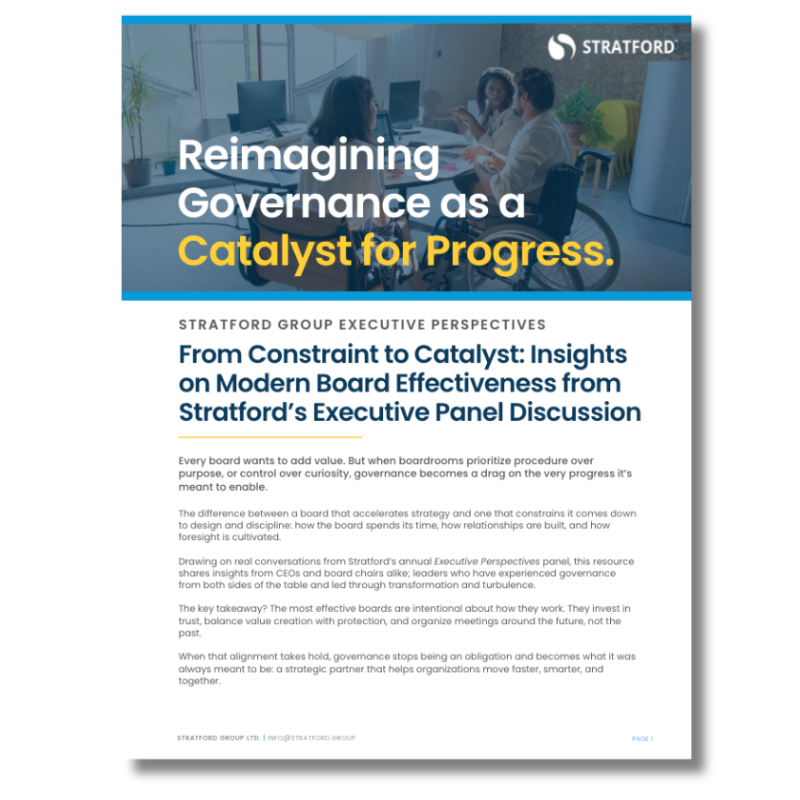
Every board wants to add value. But when boardrooms prioritize procedure over purpose, or control over curiosity, governance becomes a drag on the very progress it’s meant to enable.
The difference between a board that accelerates strategy and one that constrains it comes down to design and discipline: how the board spends its time, how relationships are built, and how foresight is cultivated.
Drawing on real conversations from Stratford’s annual Executive Perspectives panel, this resource shares insights from CEOs and board chairs alike; leaders who have experienced governance from both sides of the table and led through transformation and turbulence.
The key takeaway? The most effective boards are intentional about how they work. They invest in trust, balance value creation with protection, and organize meetings around the future, not the past.
When that alignment takes hold, governance stops being an obligation and becomes what it was always meant to be: a strategic partner that helps organizations move faster, smarter, and together.
About our Executive Perspectives Panel
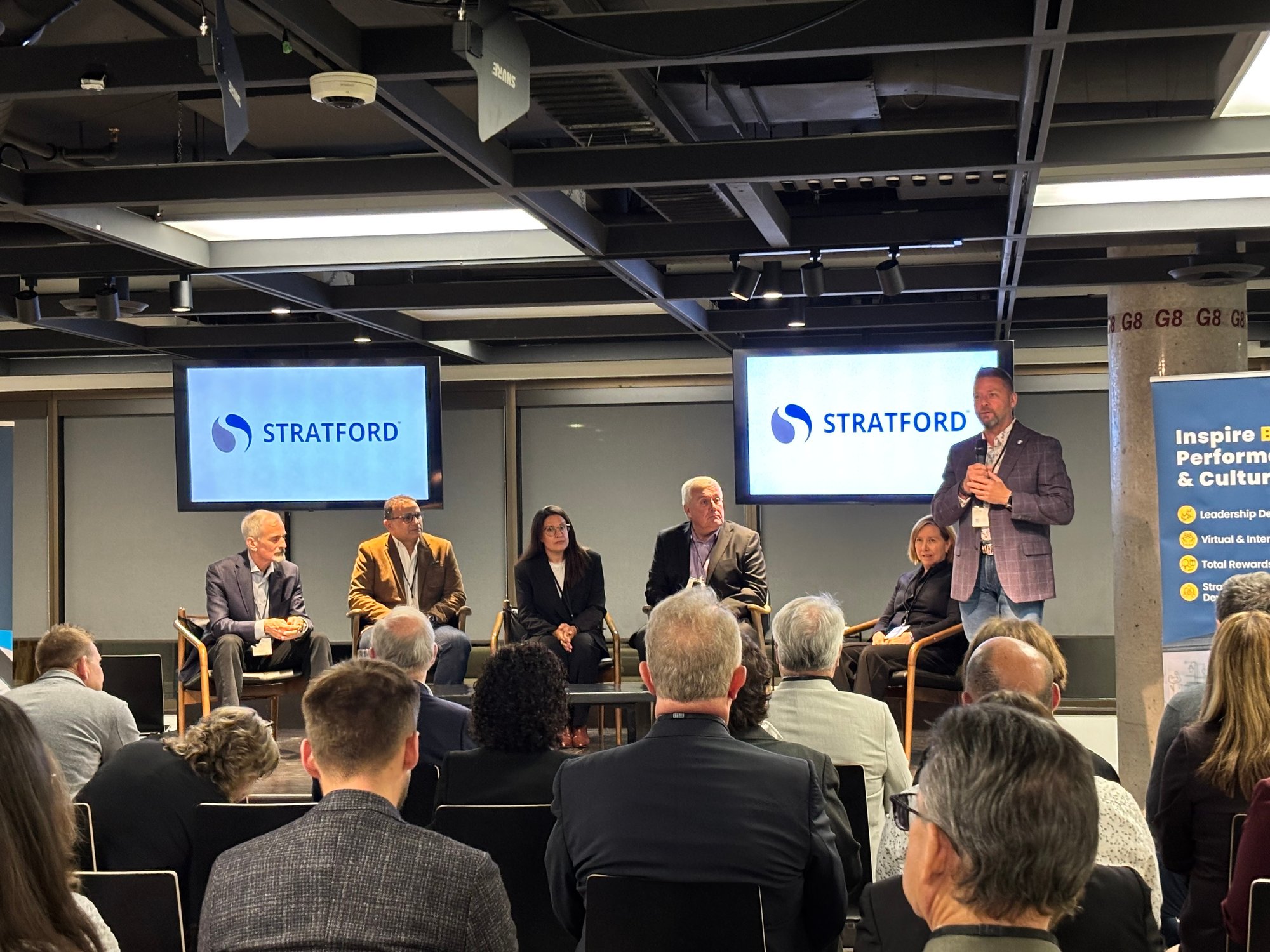
Stratford Group’s Executive Perspectives Panel is an annual event that brings together subject matter experts, CEOs, and board leaders to explore timely topics shaping leadership and organizational performance. Each year, the discussion focuses on a critical question facing today’s executives and distills lived experience into practical, actionable insight.
This year’s conversation centred on one defining question:
What distinguishes a board that enables strategy from one that constrains it?
The discussion covered the full spectrum of modern governance: trust between board and management, agenda and package design, alignment and engagement, and the evolving role of board composition and culture. Though panelists represented different sectors, from healthcare to technology to national agencies, their lessons are universal: effective governance is built on foresight, trust, and intentional design.
We wish to extend our sincere thanks to our participants for sharing their insights and experience.

Dr. Andrew Falconer
President and CEO of Queensway Carleton Hospital and practicing Emergency Physician with deep experience in healthcare leadership and governance.

Tanya Gracie
Governance Advisor, Board Chair of Youth Services Bureau of Ottawa, and Audit Committee Chair for the National Capital Commission

Dr. Tarek Helaly
President and CEO of thinkRF with over 25 years of experience in engineering, innovation, and organizational transformation

Jim Roche
President and CEO of Stratford Group, veteran entrepreneur, and long-time board director in both public and not-for-profit sectors.

Colleen Kelley
President of Stratford Management Consulting, and consultant specializing in leadership, operations, and organizational transformation.
The below is a preview of what was shared.
Interested in the Full Article?
✓ A deeper exploration of each section
✓ Practical insights to help shift from reactive to proactive governance practices.
✓ A bonus list of intellectual property considerations that should be on your next board agenda
The Catalyst Board Model
Every board wants to add value—but few know how to create real momentum. The most effective boards move beyond oversight to become strategic catalysts, balancing accountability with agility and purpose.
→ The difference between a catalytic and constraining board starts with mindset.
→ Balance governance discipline with strategic curiosity.
→ See how subtle shifts in focus can transform boardroom impact.
“If you feed the board weeds, they will live in the weeds.”
-Andrew Falconer
“There’s a distinct difference between CEOs who think of their board as catalysts versus judges.”
— Jim Roche
The Trust Engine: Chair/CEO and Board/Management Dynamics
Trust is what turns structure into strategy. It’s built in the quiet moments—between meetings, in tone, and through candour. When trust is strong, boards make better decisions faster.
→ The Chair–CEO relationship sets the tone for the entire board.
→ Trust isn’t assumed—it’s cultivated through rhythm, openness, and respect.
→ Discover small habits that strengthen alignment and reduce friction.
Foresight Over Hindsight: Agenda and Package Design
Many boards spend too much time reviewing the past and too little anticipating what’s next. Catalytic boards design meetings that elevate strategy, simplify reporting, and focus on decisions that move the organization forward.
→ Shift the balance of time from updates to insight.
→ Create board packages that prompt dialogue, not data overload.
→ Learn how agenda design can sharpen foresight.
“It’s not that anyone wants to waste time, but without discipline, you end up clogging meetings with data instead of dialogue.”
— Jim Roche
“When the board and leadership look in the same direction, the conversation stays productive. Engagement follows alignment, not the other way around.”
— Tarek Helaly
Alignment → Engagement: Turning Direction into Momentum
Alignment gives governance its gravity. When every director and executive is clear on the “why” behind strategy, engagement—and better decision-making—naturally follow.
→ Alignment starts with clarity, not control.
→ Structure and relationships both play a role in sustaining cohesion.
→ Explore ways to bring the board into strategic conversations earlier.
Selecting and Renewing the Board: Building for Chemistry and Change
The best boards aren’t static—they evolve. Composition, chemistry, and mindset determine whether a board can adapt to the organization’s stage, strategy, and culture.
→ Skills matter, but mindset matters more.
→ Diversity and chemistry are strategic assets, not checkboxes.
→ Find out how renewal cycles keep boards effective and self-aware.
“Having everyone wired the same way may feel comfortable, but it limits perspective and slows progress.”
— Jim Roche
“High-functioning boards don't happen by accident, you have to design them.”
— Tanya Gracie
Operating Mechanisms: Committees, Cadence, and Culture
Great boards run on rhythm. The right cadence, structure, and culture keep governance focused on purpose—not process. Intentional design turns meetings into momentum.
→ Rethink meeting cycles and committee purpose.
→ Build reflection and connection into your governance rhythm.
→ See how small design choices shape culture.
Intervention Playbook: Managing Disruptive Dynamics
Even the best boards face friction. What separates high-performing ones is how they respond—early, empathetically, and with courage. Accountability, done right, strengthens trust.
→ Prevention starts with clear behavioural norms.
→ Private coaching can reset relationships before they unravel.
→ Learn how to preserve culture while addressing conflict.
Conclusion:
Great boards aren’t just measured by what they oversee, but by how they help organizations move forward. This resource is your guide to building the habits, relationships, and rhythms that make that possible.
Want the Full Article?
Inside, you’ll get:
→ A deeper look at all eight dimensions of catalytic governance, from trust and foresight to alignment, renewal, and culture.
→ Actionable frameworks to help your board evolve from oversight to strategy.
→ Practical tools for your next meeting, including “10 Minutes to a Better Board”
→ Bonus: 25 Questions to Include on Your Agenda, a companion checklist from Stratford Intellectual Property to spark innovation and value protection in every board discussion.
Whether you serve in a public, private, or nonprofit organization, this white paper is designed to spark reflection, dialogue, and better board performance, one intentional practice at a time.